
Why Every Business Needs a Professional Website in 2026 (And How to Build One That Actually Works)
In 2026, having no website - or a poor one - costs businesses real customers every day. This guide explains why a professional website is the single highest-ROI investment a business can make, what it must include, and how CodexWebz builds websites that generate leads, not just traffic. Covers design, speed, SEO, mobile, and long-term support.
In this article
- Why your website is your most important business asset
- What a bad (or missing) website is costing you right now
- 11 features every professional business website must have
- Custom website vs website builder: which is right for you?
- Why speed and SEO are not optional in 2026
- How to choose a web development company
- How CodexWebz builds business websites
- Frequently asked questions
If a potential customer searches for your business right now and lands on a slow, outdated, or non-existent website — you have already lost them. They will not call. They will not email. They will click on a competitor who looks like they have their act together.
This is not speculation. According to Stanford Web Credibility Research, 75% of users judge a company's credibility based on its website design alone. And Google's own data shows that 53% of mobile visitors abandon a site that takes more than three seconds to load.
In 2026, a professional website is not a marketing expense. It is the single highest-ROI infrastructure investment a business can make. This guide covers exactly what you need, what to avoid, and how to get it built the right way — whether you are a startup in Delhi, a retailer in Dubai, or a services firm in London.
1. Why your website is your most important business asset
Your website works 24 hours a day, seven days a week, in every time zone simultaneously. No sales rep, brochure, or social media profile does that. When someone in New York researches a vendor at 11pm, or a business owner in Bengaluru Googles your category at 7am, your website is the first and often the only impression your brand makes.
More than that, your website is the hub that every other marketing effort points to. Your LinkedIn posts, your Instagram ads, your Google Business Profile, your email signature — they all send traffic to one place. If that place is slow, confusing, or untrustworthy, every rupee and dollar you spend on marketing is wasted.
"Your website is not a brochure. It is a 24/7 salesperson, a trust signal, a lead machine, and your brand's first impression — all in one."
Businesses with professionally designed websites generate up to 2.8x more leads than those without one, according to HubSpot's State of Marketing report. For e-commerce businesses, the gap is even wider — a one-second improvement in page load time can increase conversions by 7%. These numbers compound. Over a year, the revenue difference between a business with a high-performing website and one without is often larger than the cost of the website itself.
2. What a bad (or missing) website is costing you right now
Most business owners know their website is not great. What they underestimate is the daily cost of that problem. Here is what a poor online presence costs in concrete terms:
| Problem | What it actually costs you | How often it happens |
|---|---|---|
| Slow loading website | 53% of visitors leave before the page loads | Every single visit |
| No mobile optimisation | 60%+ of web traffic is mobile — all those visitors bounce | Majority of your visitors |
| No clear call-to-action | Interested visitors leave without contacting you | Very common |
| Outdated design (pre-2020) | Perceived as untrustworthy or out of business | First impression, every time |
| Poor SEO / no Google ranking | Competitors get the customers searching for your services | Every day, silently |
If your website has even two of these problems, you are likely losing multiple qualified leads every week. The good news is that all of them are fixable — and the fix pays for itself quickly. Read our related article on why website speed directly kills your Google rankings for a deeper look at the technical side of this problem.
3. 11 features every professional business website must have in 2026
Not all websites are equal. A professional business website is not just something that looks nice — it is a system built to attract, inform, and convert visitors. Here is the non-negotiable checklist:
- Fast load speed (under 3 seconds): Google uses Core Web Vitals as a ranking signal. A slow site loses both rankings and visitors. Optimised images, clean code, and proper hosting are non-negotiable.
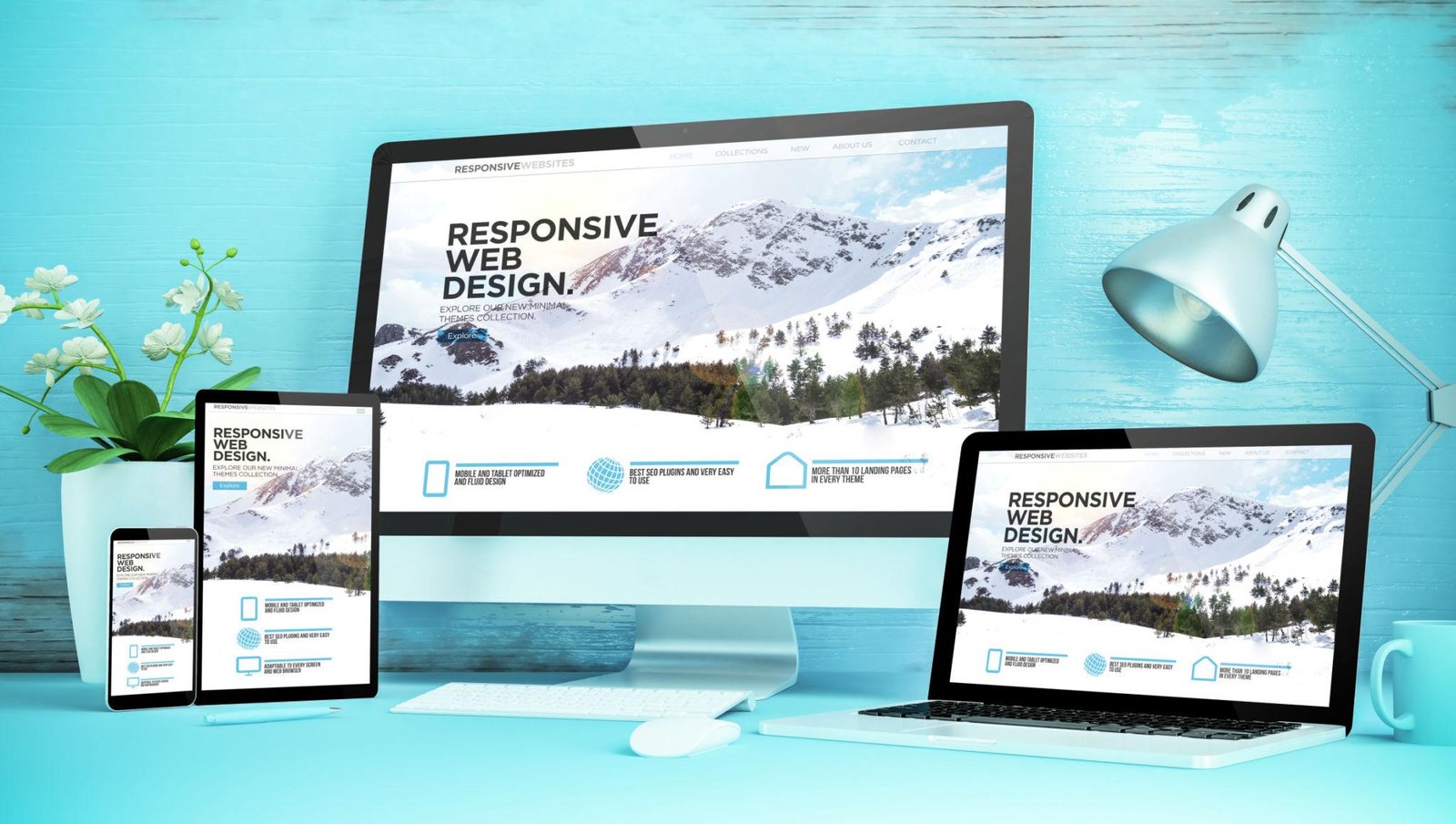
- Fully responsive mobile design: Every page must work perfectly on a 375px iPhone screen. Not just "readable" — fully functional, with tap-friendly buttons and readable font sizes.
- HTTPS and security: Google flags non-HTTPS sites as "Not Secure." Visitors see this warning and leave. SSL certificates are now a bare minimum.
- Clear, benefit-led homepage headline: Within 5 seconds of arriving, a visitor must understand what you do, who you serve, and why you are different. Vague taglines like "Excellence in service" lose visitors instantly.
- Strong calls-to-action (CTAs) on every page: Every page should guide the visitor to a next step — "Get a free quote," "View our work," "Start a project." Without CTAs, visitors read and leave with no action taken.
- Social proof (testimonials, case studies, logos): Trust is built by showing others have trusted you. Real client quotes, measurable results, and recognisable client logos are far more persuasive than any copywriting.
- A working contact system: A contact form that actually delivers emails, a visible phone number, and preferably a live chat widget. Missing or broken contact forms is one of the most common and costly website mistakes.
- SEO-optimised page structure: Proper H1/H2/H3 hierarchy, meta titles and descriptions, schema markup, and keyword-aligned page copy. This is what makes Google understand and rank your pages.
- A blog or resources section: Businesses that blog generate 67% more leads per month than those that don't (HubSpot). Regular content builds authority and drives organic traffic consistently.
- Easy-to-manage CMS: You should be able to update your team page, add a blog post, or change a service price without calling your developer every time. A proper CMS gives you this control.
- Analytics and tracking: Google Analytics 4 and Google Search Console are minimum. Without tracking, you have no idea what is working, where visitors are dropping off, or which pages are driving enquiries.
Our website development service builds every one of these features into every project as standard — not as upgrades.
4. Custom website vs website builder: which is right for your business?
The most common question we get from business owners is: "Can't I just use Wix or Squarespace?" The honest answer is: sometimes, yes — but not for long.
| Feature | Website builder (Wix / Squarespace) | Custom-built website (CodexWebz) |
|---|---|---|
| Load speed | Slow (heavy scripts) | Fast (clean, optimised) |
| SEO control | Limited | Full control |
| Brand uniqueness | Template-based | 100% custom |
| Scalability | Hits ceiling quickly | Grows with your business |
| Integrations (CRM, payments, custom tools) | Very limited | Anything possible |
| Monthly cost long-term | $16–$65/month forever | Low hosting + optional retainer |
| You own the code | No — locked in | Yes — fully portable |
Website builders are a reasonable starting point for solo freelancers testing an idea. For any business serious about growth, online sales, or brand credibility, the limitations become painful within 12 to 18 months — and migrating away from a page builder is often more expensive than building it right the first time.
If you are running an online store, a custom e-commerce platform built around your product catalog, checkout flow, and customer journey will consistently outperform a Shopify or WooCommerce template at scale.
5. Why speed and SEO are not optional in 2026
Google's algorithm has undergone fundamental changes in the last three years. Page Experience signals — including Largest Contentful Paint (LCP), Cumulative Layout Shift (CLS), and Interaction to Next Paint (INP) — are now core ranking factors. This means a slow website does not just frustrate users. It actively suppresses your search rankings.
The three speed benchmarks Google uses are:
- LCP under 2.5 seconds: How fast the main content of a page loads.
- CLS under 0.1: Whether the page layout jumps around while loading.
- INP under 200ms: How quickly the page responds to user interactions.
Beyond speed, on-page SEO in 2026 requires structured content with proper semantic HTML, keyword-aligned page titles and meta descriptions, internal linking between relevant pages, and schema markup for rich results. None of this happens automatically — it must be built into every page.
For a detailed technical breakdown, see our article on why website speed is killing your Google rankings and how to fix it. Every website CodexWebz builds is audited against Core Web Vitals before launch.
6. How to choose the right web development company
The market for web development is crowded with agencies that over-promise and under-deliver. Here is how to evaluate any web development partner before signing a contract:
- Look at real client work, not mockups. Visit the live URLs of projects in their portfolio. Open them on your phone. Check the load speed using PageSpeed Insights. Mockups in Figma tell you nothing about the quality of their actual code.
- Ask specifically about post-launch support. The most common complaint about web agencies is that they disappear after launch. Ask explicitly: "Who do I contact if something breaks at 9pm?" and "What does your maintenance process look like?"
- Confirm you own your code and domain. Some agencies build on platforms where they retain ownership. You should always own your source code, hosting account, and domain name outright.
- Check for transparent milestone-based pricing. Vague "hourly rate" contracts lead to cost overruns. A reputable agency will scope your project clearly and price it by deliverable, not by the hour.
- Ask who actually builds your site. Many agencies outsource work without telling you. Ask directly whether the team you are speaking to is building your site, or whether it is subcontracted.
7. How CodexWebz builds business websites
At CodexWebz, we build digital systems for businesses that want to grow online — not just websites that look good in a screenshot. Our process is built around your business goals, your timeline, and the expectation that we stay involved long after the site goes live.
Every project follows a structured four-stage process:
- Discovery: We start by understanding your business, your customers, and what success looks like after launch — not by opening a design tool.
- Planning and scoping: We define the right solution for your stage, budget, and timeline — and put it in writing so there are no surprises.
- Build with structure: You see progress at every milestone, review designs before they go to code, and approve before anything goes live.
- Launch and stay involved: We do not disappear after launch. Maintenance, updates, SEO monitoring, and support are built into our ongoing client relationships.
We have delivered websites, e-commerce platforms, and custom software solutions for businesses across India, the UAE, the USA, and beyond. You can see examples of our work on the client projects page.
Ready to build a website that actually works for your business?
Tell us what you need and we will scope the right solution — no obligation, no generic quotes.
8. Frequently asked questions
How much does a professional business website cost?
A professional business website typically costs between $800 and $8,000 depending on scope, features, and market. For India-based businesses, quality websites range from ₹25,000 to ₹2,00,000. Custom e-commerce and software platforms cost more. CodexWebz offers transparent, scoped pricing with no hidden fees. Get a no-obligation quote here.
How long does it take to build a business website?
A standard business or corporate website typically takes 2 to 4 weeks to build. E-commerce stores take 4 to 8 weeks. Custom software platforms take 8 to 16 weeks. Timelines depend on design complexity, content readiness, and feedback turnaround. At CodexWebz, every project includes a written timeline with clear milestones.
What makes a business website professional?
A professional business website loads in under 3 seconds, is fully responsive on mobile, has a clear call-to-action on every page, uses HTTPS, reflects the brand accurately, and is easy for the business to manage and update. It should also include analytics, proper SEO structure, and a working contact system.
Do I need a custom website or can I use a website builder?
Website builders like Wix or Squarespace work for very early-stage testing, but they limit performance, SEO, branding, and scalability. Growing businesses almost always hit a ceiling within 12–18 months and need a custom-built solution to compete seriously online. Migrating from a page builder later is often more expensive than starting with a custom build.
Does CodexWebz provide support after the website launches?
Yes — we stay involved after every launch. Maintenance, updates, bug fixes, and performance monitoring are part of our ongoing client relationships. We do not disappear after delivery, which is one of the most common complaints about web agencies and one we take seriously. Talk to us about maintenance plans.
Keep Reading
Related articles for the next step.

How a FinTech Startup Cut Deployment Time by 73% Using AI-Augmented CI/CD Pipelines in 2026
A mid-sized FinTech startup shipping 4–6 releases per week was hemorrhaging engineering hours on manual pipeline reviews, flaky tests, and rollback triage. By integrating AI-augmented CI/CD with release risk scoring and automated remediation, the team cut deployment time by 73%, reduced production incidents by 61%, and reclaimed 22 hours per sprint from manual oversight. Here's exactly how they did it.
Read article ->
AI Agents in Software Development 2026
AI agents are no longer just writing code snippets - they are planning features, running tests, and deploying software autonomously. Here is what software teams need to know about agentic AI in 2026 and how to actually use it.
Read article ->
Why Your Website Speed Is Killing Your Google Rankings (And How to Fix It)
A slow website does not just frustrate visitors — it actively pushes you down Google's rankings. Here is what Core Web Vitals actually mean for your business and the practical steps that make a real difference.
Read article ->